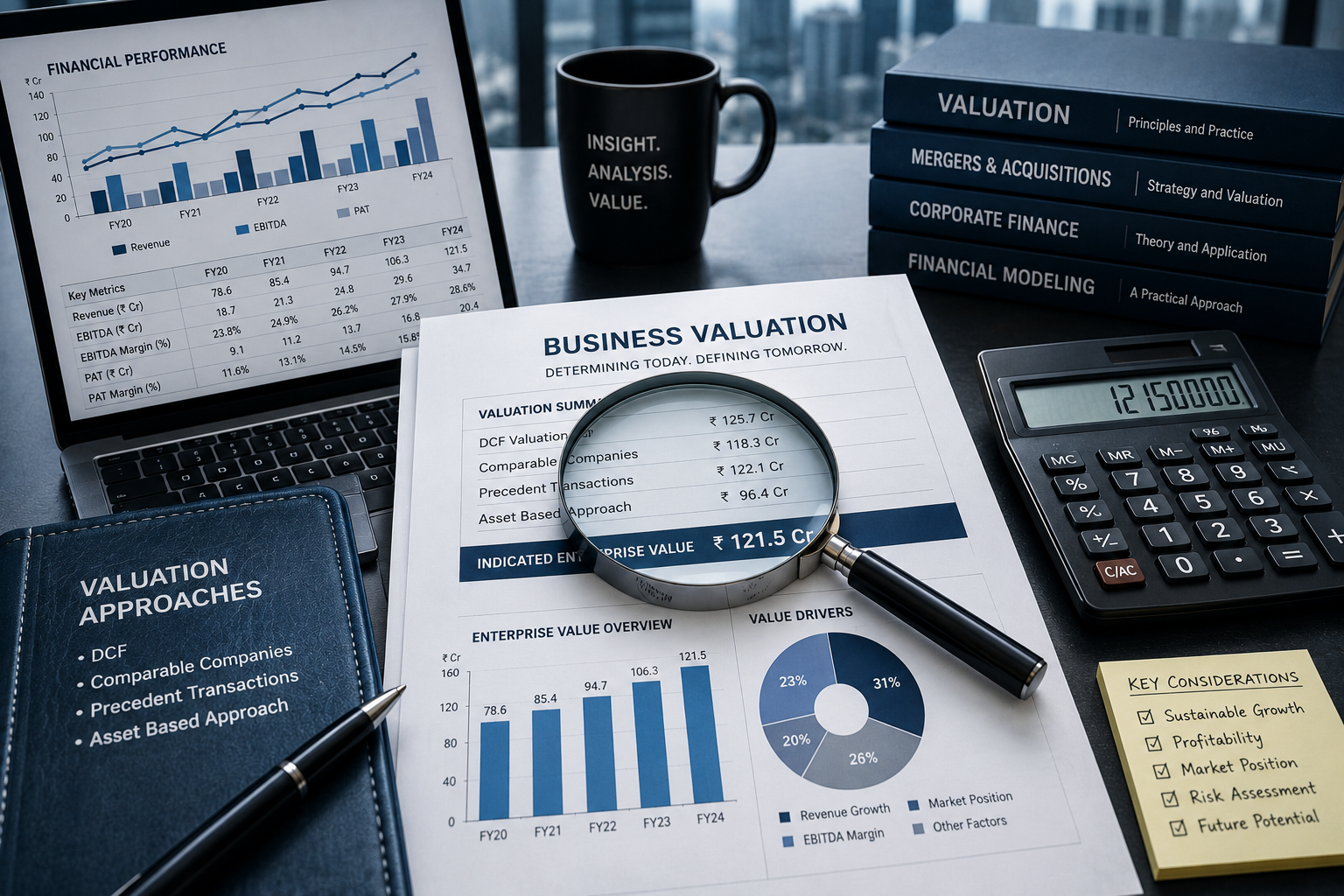
In a market where buyers and investors differentiate sharply, an independent, defensible valuation is no longer optional — it is your strongest negotiating asset.
If 2026 has one clear message for Indian promoters, it is that the market is disciplined. Investors and acquirers reward earnings visibility and healthy balance sheets, and they price companies very differently from one another. In that environment, walking into a negotiation without a rigorous view of your own value is a costly mistake.
When a buyer approaches you directly, they have usually done their homework — and the opening number tends to favour them. The antidote is an independent valuation that you can defend to investors, lenders, boards and regulators alike.
Good valuation work — business and equity valuation, fairness opinions, purchase-price allocation, scenario and sensitivity analysis — does more than set a price. It tells you which levers move your worth, where the risks are, and how to position the business before a transaction.
The best time to understand your valuation is before a fund-raise, sale or succession event is on the table — so that when the moment comes, you are negotiating from knowledge, not hope.
This article is thought-leadership for general information and is not investment, legal or financial advice. Figures referenced reflect publicly reported 2026 industry data.